Author Archives: janaremy

but there’s a lot of math…

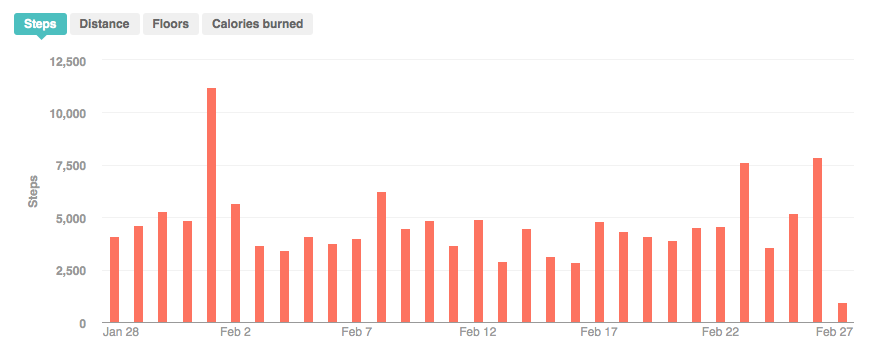
Screen shot 2014-02-27 at 11.37.56 AM

In a recent casual conversation with a friend, when I expressed interest in studying a particular topic, his reply was:

“But there’s a lot of math…”

And I realized that this reply was intended to tell me (a hapless not-mathematical female) that this would not be a topic of interest to me.  It’s quite possible that he was right, but it got me thinking about math and my own personal math-history.

When I was in 5th grade I received a C- in Math on my report card.  My parents were shocked and angry, as was I.  It turns out, it was a typo and my grade was a B (whew), but it scarred me for a long time–because I felt insecure in a numbers world and at some level I thought that I probably did deserve that lower grade.

My undergraduate degree in Biology required two years of Calculus, which was torture for me, as had been my years of high school math (the only exception: geometry–I loved writing proofs).  I suspect that my aversion to math was a combination of two things:  sheer hatred for rote homework problems and some lingering cognitive issues caused from the chemotherapy that I’d undergone just prior to high school.  To pass my Calculus courses I ended up memorizing the problem sets for the exams, because I could not grasp the concepts.  I’m still disappointed in myself for doing that, but I was so desperate to graduate…

And then I didn’t think much about math again (other than simple household calculations like doubling recipes and measuring fabric) for more than a decade.

And then I took the GRE for graduate school, without even reviewing the math portion, knowing that it didn’t “count” for someone entering the Humanities.

And then I got a higher score on the math section of the GRE than I did on the Verbal section.

Huh?

And since then I’ve come to realize the elegance of numbers, and to learn that I’m actually pretty good at math.  For me, quantitative data is slowly edging out my attraction to qualitative, which is certainly why I’m so drawn to the digital humanities, which tend to combine both approaches to research questions.  Numbers, number patterns, number visualizations…they all fascinate me (and statistics–I love statistics!).  They aren’t a chore, they don’t swim around meaninglessly in my mind.  Instead, they have a beauty and an order that is quite appealing.

And…I suspect that if I were to do things over and be back in my undergraduate years again, that those Calculus classes would hold attraction for me.  Perhaps they would even be fun.
 

the basics

(Cross-posted from my Academic Technology blog at Chapman University)

I’ve made many mistakes with technology.  I’ve lost files due to not backing them up, I’ve edited the wrong versions of my articles because I didn’t have a good strategy for saving iterations of files, and I’ve had those awful moments where my printer ink runs out (which only ever happens when time is of the essence, of course).

Because of these failures, I’ve developed a set of backup practices and I always keep several of spare printer cartridges.  Of course technology still fails sometimes (like my server crashing during the middle of a technology talk–ugh), but I think I’m generally prepared for that now.

In that vein, one of my colleagues created a list of helpful links for those who want to become more tech savvy about backing up their files and learning computer shortcuts.  It seems worth sharing here, for those of you who are also eager to learn better tech practices.

View “Basic Technology Advice for Faculty”

Download “Basic Technology Advice for Faculty” as a PDF

I have never felt the need..

12066103805_e7bd078edcPhoto taken in Tongeren, Belgium.


Loved this thought, on being satisfied with this world, and not needing an afterlife (or a God)…

You see, I have never felt the need to invent a world beyond this world, for this world has always seemed large and beautiful enough for me.  I have wondered why it is not large and beautiful enough for others–why they must dream up new and marvelous spheres, or long to live elsewhere, beyond this dominion…but that is not my business.  We are all different, I suppose.  All I ever wanted to know was this world.  I can say now, as I reach my end, that I know quite a bit more of it than when I arrived.  Moreover, my little bit of knowledge has been added to all the other accumulated knowledge of history–added to the great library, as it were.  That is no small feat, sir.  Anyone who can say such a thing has lived a fortunate life.

~Alma Whittaker in _The Signature of All Things_

Having students write an NEH grant proposal as a course assignment

In teaching my “Intro to DH” class last semester to Chapman’s MA/MFA graduate students, I spent a lot of time discussing professionalization and a significant part of that discussion focused on how funding agencies (like the NEH-ODH) make DH projects do-able.  As the culmination of this conversation, for the final project in the course I had the students compose mock applications for an NEH-ODH startup grant.

I designed the course in this manner for three primary reasons:

1) The first time I had to write a grant proposal for external funding, I found it incredibly daunting to describe what I aimed to do with my project when I wasn’t even yet sure myself what I would find once the project got underway.  Doing the legwork and the guesswork involved in that process  and then writing coherently about it, was much more difficult than I expected.  Thus, I felt that it would be a great learning experience for the students to do this before they had actual money at stake.

2) Crafting a mock NEH-ODH application reinforced many of the concepts that we’d discussed in class, and brought them together in such a way that it showed me that the students understood the filed of DH better than if they’d simply written a traditional end-of-the-semester paper.  In their proposal they had to discuss other similar projects, outline their technical requirements, include descriptions of team members’ skills, craft a budget, and create a plan for the sustainability of their project.  From their proposals I had a strong sense of what they’d learned throughout the semester since when the class started the students had only the foggiest notion of what a DH project entailed.

3) Writing a grant application is a portable skill that could serve the students in a wide-variety of ways after they graduate, even if they don’t continue in academia.  Learning to communicate their research ideas to a general audience could serve them in many ways, including a future in technical writing, project management, journalism, or in a non-profit job.

The success of the students in their proposals far exceeded my expectations.  As each student gave a lightning talk description of what they aimed to do, I realized that nearly every one of them was worthy of funding.  And not only that, since December several of the students have moved forward with their projects on their own (sans funding), based on the proposals that they outlined in our class.

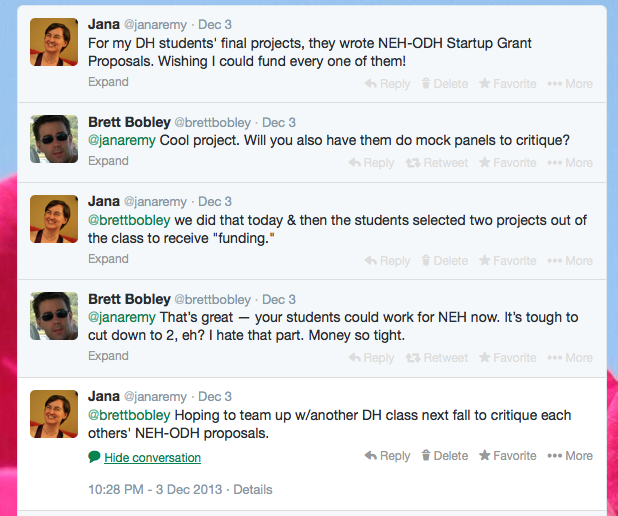
At the end of the semester I tweeted about our project and caught the attention of Brett Bobley (the CIO of the NEH and the director of the ODH).  That exchange:

Screen shot 2014-02-10 at 2.57.04 PM

on my nightstand…

This week’s books-in-progress (click on the book covers to connect to the titles on amazon):

Highly recommended for those of us who are struggling to keep writing academic articles amidst our other busy-nesses.

Enjoying this historical-fiction book immensely. It’s got a bit of everything that I love: ocean explorers, early America, science, feminism, and engaging characters. Nothing like that other book that Gilbert is so famous for writing.

And speaking of Elizabeth Gilbert, here she is again on my nightstand. I haven’t yet started this one, but I aim to later this week.

I’m skimming this one as part of my resolution to worry less about money. I’d prefer to enjoy money rather than fret about it obsessively.
on NOT getting things done…

I’m a sucker for productivity tips, and was just reading yet-another article in this vein, when it hit me: almost all of my “resolves” for 2014 are really about decreasing my productivity.

I want to:

-sleep more

-cook most of my meals at home

-plant a bigger veggie garden

-fret less about money

-read more books

-take long walks

-write for pleasure

-own less stuff

-do yoga, daily

-go camping, monthly

-be a better friend/neighbor/colleague/family member

-live closer to where I work

This week, on my nightstand

What I’m reading right now*:

I loved the Yiddish Policeman’s Union, so I picked this one up a few months ago.  But I’ve not found it nearly as engaging as I’d hoped–I’m having to push my way pretty hard through to the end.  The characters of this one just aren’t grabbing me and keeping me interested.


Jared Farmer’s recent SoCal lecture about Trees was one of the best that I’ve heard in a long time.  I’ve been dipping in and out of his book and find it to be one of the best-written history books that I’ve encountered this year.  And, the landscape around the OC looks so different to me after reading Jared’s tome.


My officemate recommended this book to me after she learned of my interest in western history.  It’s about the Indian Wars, which is an era of history that’s not easy to digest.  The writing is accessible (i.e. not for a historian-audience) and breezy.  If you enjoy western history, I’d recommend that you add this one to your nightstand.


And then there’s Tom Zoellner’s latest, Train.  I haven’t started it yet, because I’ve got to finish a few of these others first.  But I can’t wait!


*Click on the book images to visit the amazon pages for these books.

getting things done…

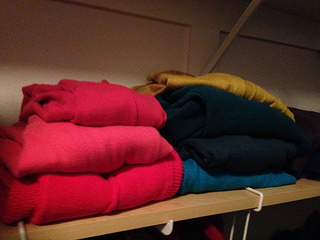
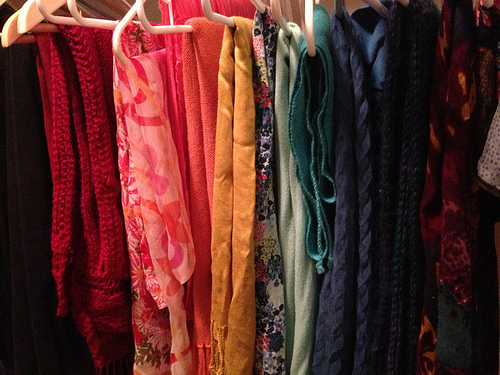
This past weekend was my first one home in SoCal since the holidays.  It felt so good to be able to attack the long list of “to-do”s that were waiting for me, that I kept at it all weekend.  Among those was tidying my closet (and making rainbows of my scarves & sweaters):

12201268716_f070d8872b_n 12201264526_377d457143

I planted a few seeds in the garden, enjoyed a long outrigger paddle out on the ocean with my team, spent quality time with Catgirl, ran errands, and had plenty of sleep and homecooked meals.  Not to mention the several loads of dirty laundry that are now clean and put away.

And…I got caught up on all of my snailmail and paperwork, including the many (many) financial forms for the kids’ college funds.  Then, at lunchtime today I filed both my federal and state taxes(!)–the earliest ever.

Whew.  What a great feeling, to have accomplished so much.

time for reflection

Cape Cod

Cape Cod

“We don’t have any time for reflective practice,” explained my brother-in-law, a junior high school science teacher.  He went on to say that he and his colleagues were just barely keeping their heads about water with their teaching loads so they rarely had time to thoughtfully consider changes to their methods or curriculum.

This was in response to my telling him that I had just finished teaching for the semester and was in the phase of considering what had gone well and what I’d like to change for the next time around, and was amending my syllabus accordingly.  I hadn’t considered before that this was a luxury, to have time for reflection at the end of the term.  But I suppose it is–I only teach one class at a time because the rest of my day is spent on administrative duties.  So that one class garners the lion’s share of my mental attention and I consider each of my successes and frustrations in the classroom fairly closely.

This was on my mind as I read AHA President Ken Pomeranz’ article “Some Habits of Mind Historians Keep Hidden” in the recent issue of Perspectives.  Like my research practices, most of my teaching practices tend to be “hidden habits” rather than techniques that I discuss often with colleagues or friends.  And I plan to change that, because I’ve had some rather remarkable experiences in the classroom during my time at Chapman, and I’d like to discuss some of what I’ve learned–in the hopes that it will not only be of interest to my readers, but also to help me to improve my own teaching as I reflect on what has worked best for my students’ learning.